Preparing your patients for IMCIVREE treatment

Once-daily icon

Once-daily administration of IMCIVREE can help reduce BMI and hunger1

Subcutaneous injection, administered1:

  • At the beginning of the day
  • With or without food
  • In the abdomen, thigh, or arm, rotating injection sites daily

IMCIVREE can be self-administered or given by a caregiver. Refrigerated storage is recommended, with room temperature storage permitted for up to 30 days.1
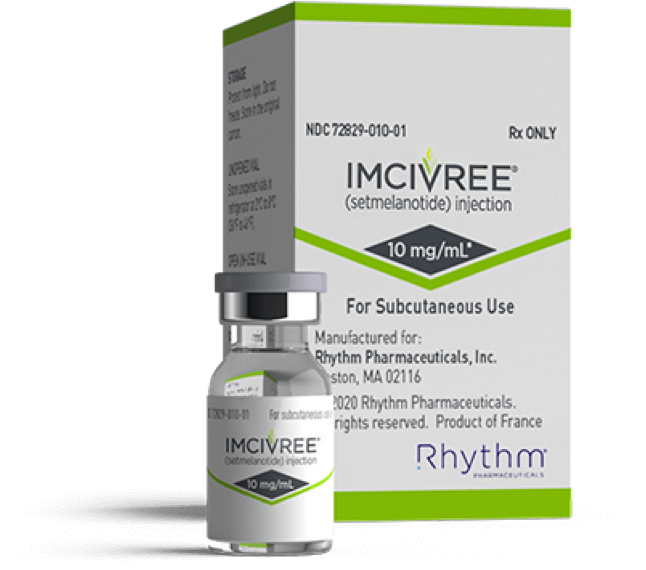
Glass vial and packaging for IMCIVREE

Reestablishing MC4R pathway function through continuous treatment with IMCIVREE is foundational for effective long-term treatment of acquired HO.1

Rhythm InTune logo

Find out how Rhythm InTune provides injection training for patients and caregivers.

Learn More

Follow the titration schedule to reach a maintenance dose to optimize efficacy and tolerability1

Young Children (4 to <6 years of age)1
Baseline body weightWeeks 1-2 (Starting Dose)Weeks 3-4Weeks 5-6Week 7 and onward
15 to <20 kg (33 to <44 lbs)0.5 mg once daily (recommended maintenance dose)
20 to <30 kg (44 to <66 lbs)0.5 mg once daily1.0 mg once daily (recommended maintenance dose)
30 to <40 kg (66 to <88 lbs)0.5 mg once daily1.0 mg once daily1.5 mg once daily (recommended maintenance dose)
≥40 kg (≥88 lbs)0.5 mg once daily1.0 mg once daily1.5 mg once daily2.0 mg once daily (recommended maintenance dose)

If the starting
dose is:

  • Not tolerated, discontinue
  • Tolerated for the initial 2 weeks, increase dosage based on baseline body weight, as shown in the schedule above

When the child reaches age 6, the maintenance dose increases to 3.0 mg regardless of weight.1

Adults and children (≥6 years of age)1
Weeks 1-2 (Starting Dose)Weeks 3-4Weeks 5-6Weeks 7 and onward
0.5 mg once daily1.0 mg once daily2.0 mg once daily3.0 mg once daily (recommended maintenance dose)

If the starting
dose is:

  • Not tolerated, discontinue
  • Tolerated for the initial 2 weeks, increase dosage as shown in the schedule above

No dose adjustments are needed for patients with mild to moderate renal impairment. IMCIVREE is not recommended for use in patients with acquired HO and severe renal impairment or in patients with end-stage renal disease.1

Select Monitoring Information

For patients with secondary adrenal insufficiency1:

Patients with acquired HO and secondary adrenal insufficiency reported serious adverse reactions related to acute adrenal insufficiency in 5% of IMCIVREE-treated patients and no placebo-treated patients. In patients with secondary adrenal insufficiency, monitor for clinical signs of acute adrenal insufficiency.

For patients with central diabetes insipidus1:

Patients with acquired HO and concomitant central diabetes insipidus (DI)/arginine vasopressin (AVP) deficiency reported hyponatremia in 6% of IMCIVREE-treated patients and 2% of placebo-treated patients and hypernatremia in 5% of IMCIVREE-treated patients and 4% of placebo-treated patients. Monitor serum sodium levels with changes in fluid intake and hydration status. Adjust the doses of concomitant therapies for DI/AVP deficiency as needed.

Patients with pre-existing DI/AVP deficiency and/or secondary adrenal insufficiency should be monitored and counseled as outlined in the PI. Endocrinologists should review patients’ existing coordination plans once they start IMCIVREE to help manage these conditions and adjust concomitant therapies as needed.

Effective, long-term weight management starts with setting patient expectations

In clinical trials, it took some time for weight and hunger reductions to be noted, while patients experienced certain AEs soon after starting treatment. This chart highlights some of the most common AEs, but it does not include all reported AEs.1,2

Timing of common effects seen in clinical trials1,2
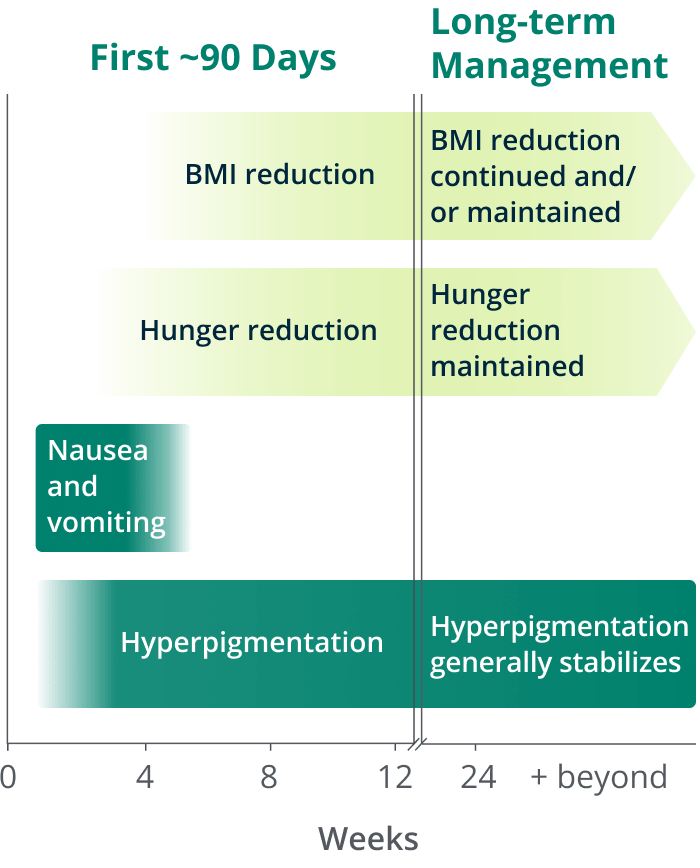
Timeline of clinical effects including onset of weight loss, hunger reduction, and common side effects
Patients may experience certain adverse events early in treatment, while weight and hunger reductions may take time to be apparent.

BMI reduction

Improvement was evident within 4 weeks of initiation and continued with ongoing treatment.1

Hunger reduction

Improvement was reported soon after treatment initiation and was maintained with ongoing treatment.1

Nausea and vomiting

Events occurred most frequently within the first month of treatment, then declined.1

Hyperpigmentation

Hyperpigmentation increased throughout the dose escalation period and generally plateaued in the initial months of treatment.1,2

Achieving the benefits of treatment with IMCIVREE may take time. Talking to patients about when they can expect weight and hunger benefits and common adverse reactions may help them manage through the short-term treatment initiation to achieve their longer-term goals.

Find resources for your practice and for your patients considering IMCIVREE.

Start prescribing IMCIVREE and learn about patient support.

AEs=adverse events, BMI=body mass index, HO=hypothalamic obesity, kg=kilogram, lbs=pounds, MC4R=melanocortin-4 receptor, mg=milligram.

Indication

IMCIVREE is indicated to reduce excess body weight and maintain weight reduction long term in adults and pediatric patients aged 4 years and older with acquired hypothalamic obesity (HO).

Limitations of Use

IMCIVREE is not indicated for the treatment of patients with the following conditions as IMCIVREE would not be expected to be effective:

  • Other types of obesity not related to acquired hypothalamic obesity or other FDA-approved indications for IMCIVREE, including obesity associated with other genetic syndromes and general (polygenic) obesity

Important Safety Information

Contraindications

Prior serious hypersensitivity to setmelanotide or any of the excipients in IMCIVREE. Serious hypersensitivity reactions (e.g., anaphylaxis) have been reported.

Warnings and Precautions

Disturbance in Sexual Arousal: Spontaneous penile erections and increased frequency of penile erections in males have occurred. Inform patients that these events may occur and instruct patients who have an erection lasting longer than 4 hours to seek emergency medical attention.

Depression and Suicidal Ideation: Depression and suicidal ideation have occurred. Monitor patients for new onset or worsening depression or suicidal thoughts or behaviors. Consider discontinuing IMCIVREE if patients experience suicidal thoughts or behaviors, or clinically significant or persistent depression symptoms occur.

Hypersensitivity Reactions: Serious hypersensitivity reactions (e.g., anaphylaxis) have been reported. If suspected, advise patients to promptly seek medical attention and discontinue IMCIVREE.

Skin Hyperpigmentation, Darkening of Pre-existing Nevi, and Development of New Melanocytic Nevi: Generalized or focal increases in skin pigmentation occurred in the majority of IMCIVREE-treated patients. IMCIVREE may also cause development of new melanocytic nevi or darkening of pre-existing nevi. Perform a full body skin examination prior to initiation and periodically during treatment to monitor pre-existing and new pigmented lesions.

Acute Adrenal Insufficiency with Acquired HO: Patients with acquired HO and secondary adrenal insufficiency reported serious adverse reactions related to acute adrenal insufficiency in 5% of IMCIVREE-treated patients and no placebo-treated patients. In patients with secondary adrenal insufficiency, monitor for clinical signs of acute adrenal insufficiency.

Sodium Imbalance in Patients with Acquired HO and Central Diabetes Insipidus: Patients with acquired HO and concomitant central diabetes insipidus (DI)/arginine vasopressin (AVP) deficiency reported hyponatremia in 6% of IMCIVREE-treated patients and 2% of placebo-treated patients and hypernatremia in 5% of IMCIVREE-treated patients and 4% of placebo-treated patients. Monitor serum sodium levels with changes in fluid intake and hydration status. Adjust the doses of concomitant therapies for DI/AVP deficiency as needed.

Adverse Reactions

  • Most common adverse reactions (incidence ≥20%) included skin hyperpigmentation, nausea, vomiting, and headache

Use in Specific Populations

Treatment with IMCIVREE is not recommended when breastfeeding. Discontinue IMCIVREE when pregnancy is recognized unless the benefits of therapy outweigh the potential risks to the fetus.

Please see full Prescribing Information for additional Important Safety Information.

References: 1. IMCIVREE [prescribing information]. Boston, MA. Rhythm Pharmaceuticals, Inc., 2026. 2. Kanti V, Puder L, Jahnke I, et al. A melanocortin-4 receptor agonist induces skin and hair pigmentation in patients with monogenic mutations in the leptin-melanocortin pathway. Skin Pharmacol Physiol. 2021;34(6):307-316. doi:10.1159/000516282

Indication and Important Safety Information

Indication

IMCIVREE is indicated to reduce excess body weight and maintain weight reduction long term in adults and pediatric patients aged 4 years and older with acquired hypothalamic obesity (HO).

Limitations of Use

IMCIVREE is not indicated for the treatment of patients with the following conditions as IMCIVREE would not be expected to be effective:

  • Other types of obesity not related to acquired hypothalamic obesity or other FDA-approved indications for IMCIVREE, including obesity associated with other genetic syndromes and general (polygenic) obesity

Important Safety Information

Contraindications

Prior serious hypersensitivity to setmelanotide or any of the excipients in IMCIVREE. Serious hypersensitivity reactions (e.g., anaphylaxis) have been reported.

Warnings and Precautions

Disturbance in Sexual Arousal: Spontaneous penile erections and increased frequency of penile erections in males have occurred. Inform patients that these events may occur and instruct patients who have an erection lasting longer than 4 hours to seek emergency medical attention.

Depression and Suicidal Ideation: Depression and suicidal ideation have occurred. Monitor patients for new onset or worsening depression or suicidal thoughts or behaviors. Consider discontinuing IMCIVREE if patients experience suicidal thoughts or behaviors, or clinically significant or persistent depression symptoms occur.

Hypersensitivity Reactions: Serious hypersensitivity reactions (e.g., anaphylaxis) have been reported. If suspected, advise patients to promptly seek medical attention and discontinue IMCIVREE.

Skin Hyperpigmentation, Darkening of Pre-existing Nevi, and Development of New Melanocytic Nevi: Generalized or focal increases in skin pigmentation occurred in the majority of IMCIVREE-treated patients. IMCIVREE may also cause development of new melanocytic nevi or darkening of pre-existing nevi. Perform a full body skin examination prior to initiation and periodically during treatment to monitor pre-existing and new pigmented lesions.

Acute Adrenal Insufficiency with Acquired HO: Patients with acquired HO and secondary adrenal insufficiency reported serious adverse reactions related to acute adrenal insufficiency in 5% of IMCIVREE-treated patients and no placebo-treated patients. In patients with secondary adrenal insufficiency, monitor for clinical signs of acute adrenal insufficiency.

Sodium Imbalance in Patients with Acquired HO and Central Diabetes Insipidus: Patients with acquired HO and concomitant central diabetes insipidus (DI)/arginine vasopressin (AVP) deficiency reported hyponatremia in 6% of IMCIVREE-treated patients and 2% of placebo-treated patients and hypernatremia in 5% of IMCIVREE-treated patients and 4% of placebo-treated patients. Monitor serum sodium levels with changes in fluid intake and hydration status. Adjust the doses of concomitant therapies for DI/AVP deficiency as needed.

Adverse Reactions

  • Most common adverse reactions (incidence ≥20%) included skin hyperpigmentation, nausea, vomiting, and headache

Use in Specific Populations

Treatment with IMCIVREE is not recommended when breastfeeding. Discontinue IMCIVREE when pregnancy is recognized unless the benefits of therapy outweigh the potential risks to the fetus.

Please see full Prescribing Information for additional Important Safety Information.

References:1. IMCIVREE [prescribing information]. Boston, MA. Rhythm Pharmaceuticals, Inc., 2026.2. Kanti V, Puder L, Jahnke I, et al. A melanocortin-4 receptor agonist induces skin and hair pigmentation in patients with monogenic mutations in the leptin-melanocortin pathway. Skin Pharmacol Physiol. 2021;34(6):307-316. doi:10.1159/000516282