
For patients 4 years and older

Now Approved

as the first and only targeted treatment for acquired hypothalamic obesity (HO)

IMCIVREE targets impairment of the hypothalamic MC4R pathway, the root cause of weight gain and increased hunger in acquired HO.1

Acquired HO is a disease characterized by weight gain following hypothalamic injury. Some causes of injury leading to acquired HO can include hypothalamic-pituitary tumors, tumor treatment, and traumatic brain injury.1,2

IMCIVREE is indicated to reduce excess body weight, and to maintain reduction long term in patients with acquired HO.1

Chat Bubbles Icon

Get Answers

A Rhythm representative can directly address your questions and provide helpful resources
Line Graph and Bar Chart Icon

See the Data

Explore efficacy and safety of IMCIVREE for acquired HO

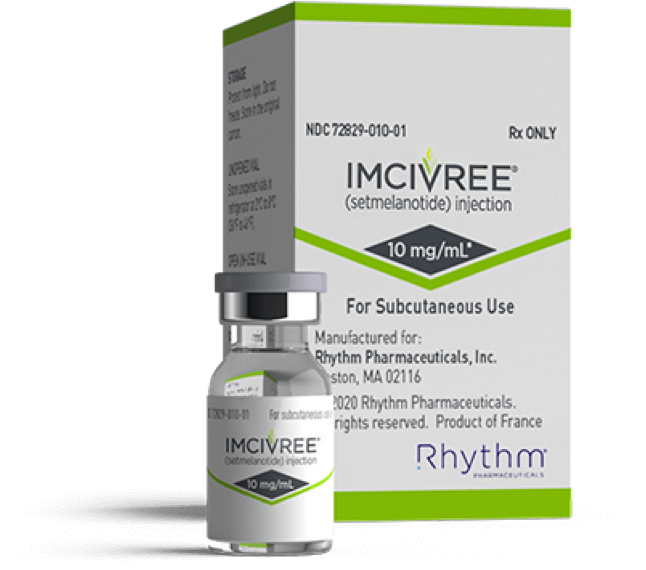
IMCVIREE (setmelanotide) Container

Getting Started

Prescribing IMCIVREE for your patients

  1. Download the IMCIVREE Prescription Start Form (preferred method)
    Use the Start Form to initiate the prescription and help connect your patient with Rhythm InTune.
  2. Complete all fields in the Start Form
    Select the appropriate indication and choose the titration and maintenance dose by age and, for ages 4 to <6, by weight.
    • To enroll in Rhythm InTune, your patient should complete and sign pages 2 and 3.
  3. Sign and submit the Start Form
    Fax the completed form to 1-877-805-0130 or email it to patientsupport@rhythmtx.com.

If e-prescribing, please be sure to:

  • Select PANTHERx Rare Pharmacy in the US, or Special Care Pharmacy Services in Puerto Rico
  • Consider also submitting the Prescription Start Form, which includes the Rhythm InTune patient consent form and additional information fields often required for insurance approval, as these are not typically included when e-prescribing

Download Prescription Start Form
Father and Daughter smiling

Actor portrayals

Patient Support

Rhythm InTune helps patients and caregivers along their IMCIVREE journey

Help connect your patients with Rhythm InTune, a dedicated one-on-one support program that can help patients with:

  • Benefits verification, navigating prior authorization, and financial assistance support for eligible patients
  • Getting started on treatment
  • Injection training, disease education, and wellness tips
  • Connecting to a community of other people living with acquired HO

For more information about Rhythm InTune, contact us at 1-855-206-0815 (M-F, 8am-6pm ET) or at patientsupport@rhythmtx.com.

Download InTune Brochure

Stay informed about IMCIVREE and receive additional resources about acquired HO

Sign Up for Updates


Desktop Angular GraphicMobile Angular Graphic

Indication

IMCIVREE is indicated to reduce excess body weight and maintain weight reduction long term in adults and pediatric patients aged 4 years and older with acquired hypothalamic obesity (HO).

Limitations of Use

IMCIVREE is not indicated for the treatment of patients with the following conditions as IMCIVREE would not be expected to be effective:

  • Other types of obesity not related to acquired hypothalamic obesity or other FDA-approved indications for IMCIVREE, including obesity associated with other genetic syndromes and general (polygenic) obesity

Important Safety Information

CONTRAINDICATIONS

Prior serious hypersensitivity to setmelanotide or any of the excipients in IMCIVREE. Serious hypersensitivity reactions (e.g., anaphylaxis) have been reported.

WARNINGS AND PRECAUTIONS

Disturbance in Sexual Arousal: Spontaneous penile erections and increased frequency of penile erections in males have occurred. Inform patients that these events may occur and instruct patients who have an erection lasting longer than 4 hours to seek emergency medical attention.

Depression and Suicidal Ideation: Depression and suicidal ideation have occurred. Monitor patients for new onset or worsening depression or suicidal thoughts or behaviors. Consider discontinuing IMCIVREE if patients experience suicidal thoughts or behaviors, or clinically significant or persistent depression symptoms occur.

Hypersensitivity Reactions: Serious hypersensitivity reactions (e.g., anaphylaxis) have been reported. If suspected, advise patients to promptly seek medical attention and discontinue IMCIVREE.

Skin Hyperpigmentation, Darkening of Pre-existing Nevi, and Development of New Melanocytic Nevi: Generalized or focal increases in skin pigmentation occurred in the majority of IMCIVREE-treated patients. IMCIVREE may also cause development of new melanocytic nevi or darkening of pre-existing nevi. Perform a full body skin examination prior to initiation and periodically during treatment to monitor pre-existing and new pigmented lesions.

Acute Adrenal Insufficiency with Acquired HO: Patients with acquired HO and secondary adrenal insufficiency reported serious adverse reactions related to acute adrenal insufficiency in 5% of IMCIVREE-treated patients and no placebo-treated patients. In patients with secondary adrenal insufficiency, monitor for clinical signs of acute adrenal insufficiency.

Sodium Imbalance in Patients with Acquired HO and Central Diabetes Insipidus: Patients with acquired HO and concomitant central diabetes insipidus (DI)/arginine vasopressin (AVP) deficiency reported hyponatremia in 6% of IMCIVREE-treated patients and 2% of placebo-treated patients and hypernatremia in 5% of IMCIVREE-treated patients and 4% of placebo-treated patients. Monitor serum sodium levels with changes in fluid intake and hydration status. Adjust the doses of concomitant therapies for DI/AVP deficiency as needed.

ADVERSE REACTIONS
  • Most common adverse reactions (incidence ≥20%) included skin hyperpigmentation, nausea, vomiting, and headache
USE IN SPECIFIC POPULATIONS

Treatment with IMCIVREE is not recommended when breastfeeding. Discontinue IMCIVREE when pregnancy is recognized unless the benefits of therapy outweigh the potential risks to the fetus.

Please see the full Prescribing Information for additional Important Safety Information.

References: 1. IMCIVREE [prescribing information]. Boston, MA: Rhythm Pharmaceuticals, Inc., 2026. 2. Rose SR, Horne VE, Bingham N, Jenkins T, Black J, Inge T. Hypothalamic obesity: 4 years of the International Registry of Hypothalamic Obesity Disorders. Obesity (Silver Spring). 2018;26(11):1727-1732. doi:10.1002/oby.22315

Indication and Important Safety Information

Indication

IMCIVREE is indicated to reduce excess body weight and maintain weight reduction long term in adults and pediatric patients aged 4 years and older with acquired hypothalamic obesity (HO).

Limitations of Use

IMCIVREE is not indicated for the treatment of patients with the following conditions as IMCIVREE would not be expected to be effective:

  • Other types of obesity not related to acquired hypothalamic obesity or other FDA-approved indications for IMCIVREE, including obesity associated with other genetic syndromes and general (polygenic) obesity

Important Safety Information

CONTRAINDICATIONS

Prior serious hypersensitivity to setmelanotide or any of the excipients in IMCIVREE. Serious hypersensitivity reactions (e.g., anaphylaxis) have been reported.

WARNINGS AND PRECAUTIONS

Disturbance in Sexual Arousal: Spontaneous penile erections and increased frequency of penile erections in males have occurred. Inform patients that these events may occur and instruct patients who have an erection lasting longer than 4 hours to seek emergency medical attention.

Depression and Suicidal Ideation: Depression and suicidal ideation have occurred. Monitor patients for new onset or worsening depression or suicidal thoughts or behaviors. Consider discontinuing IMCIVREE if patients experience suicidal thoughts or behaviors, or clinically significant or persistent depression symptoms occur.

Hypersensitivity Reactions: Serious hypersensitivity reactions (e.g., anaphylaxis) have been reported. If suspected, advise patients to promptly seek medical attention and discontinue IMCIVREE.

Skin Hyperpigmentation, Darkening of Pre-existing Nevi, and Development of New Melanocytic Nevi: Generalized or focal increases in skin pigmentation occurred in the majority of IMCIVREE-treated patients. IMCIVREE may also cause development of new melanocytic nevi or darkening of pre-existing nevi. Perform a full body skin examination prior to initiation and periodically during treatment to monitor pre-existing and new pigmented lesions.

Acute Adrenal Insufficiency with Acquired HO: Patients with acquired HO and secondary adrenal insufficiency reported serious adverse reactions related to acute adrenal insufficiency in 5% of IMCIVREE-treated patients and no placebo-treated patients. In patients with secondary adrenal insufficiency, monitor for clinical signs of acute adrenal insufficiency.

Sodium Imbalance in Patients with Acquired HO and Central Diabetes Insipidus: Patients with acquired HO and concomitant central diabetes insipidus (DI)/arginine vasopressin (AVP) deficiency reported hyponatremia in 6% of IMCIVREE-treated patients and 2% of placebo-treated patients and hypernatremia in 5% of IMCIVREE-treated patients and 4% of placebo-treated patients. Monitor serum sodium levels with changes in fluid intake and hydration status. Adjust the doses of concomitant therapies for DI/AVP deficiency as needed.

ADVERSE REACTIONS
  • Most common adverse reactions (incidence ≥20%) included skin hyperpigmentation, nausea, vomiting, and headache
USE IN SPECIFIC POPULATIONS

Treatment with IMCIVREE is not recommended when breastfeeding. Discontinue IMCIVREE when pregnancy is recognized unless the benefits of therapy outweigh the potential risks to the fetus.

Please see the full Prescribing Information for additional Important Safety Information.

References:1. IMCIVREE [prescribing information]. Boston, MA: Rhythm Pharmaceuticals, Inc., 2026.2. Rose SR, Horne VE, Bingham N, Jenkins T, Black J, Inge T. Hypothalamic obesity: 4 years of the International Registry of Hypothalamic Obesity Disorders. Obesity (Silver Spring). 2018;26(11):1727-1732. doi:10.1002/oby.22315